You may be familiar with an old legend about a dog, a baby, and a broken man. If you are, then bear with me as this story is of more than just on old Welsh fairy-tale. For those who are not so well versed in old folk tales from the more remote parts of the British Isles, let me put you in the picture.
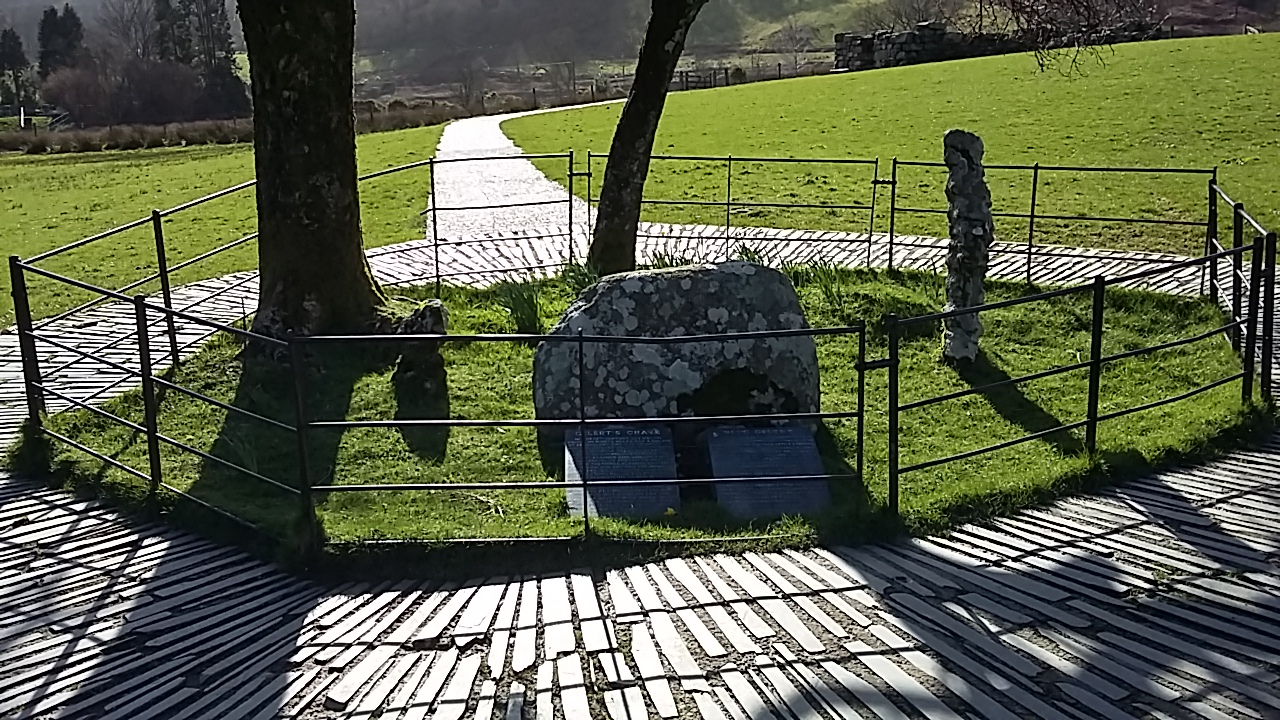
In the 13th century, Llywelyn, Prince of Gwyndd, lived in a palace located in a valley in the mountains of North Wales. One day he went hunting without Gelert, his faithful hound, who was unaccountably absent. Upon Llywelyn’s return, he was greeted by the truant dog, stained in blood, who sprang joyfully to meet his master. The Prince, alarmed by the sight of blood, hastened to find his son. He found the infant’s cot empty and the floor and bedclothes covered with blood. Believing Gelert had killed his baby son, the frantic father plunged his sword into the hound’s side. Yet, the dog’s dying yelp was answered by the cry of a child. Llywelyn searched and found his young son alive and unharmed but nearby also lay the body of a mighty wolf which the Prince’s ever faithful hound, Gelert, had slain. The Prince, filled with remorse, is said to have never smiled again. He buried his loyal friend in the grounds of the palace at a spot that came to be known as ‘Gelert’s Grave’.
‘Gelert’s Grave’, or Beddgelert in Welsh, is a small village located in the mountains of Snowdonia in North Wales. The words of the legend are etched into a stone that marks the spot believed to be the dog’s grave, and have been similarly etched into my memory since early childhood. The ‘grave’, marked by the stone and an earth mound, was actually built in the late 18th-century by the landlord of the Goat Hotel who created it as a landmark in order to encourage tourism and increase his business. In truth, the village is probably named after an early Christian missionary called Celert who settled in the mountain valley early in the 8th century. The earliest record of the name ‘Beddgelert’ appears on a document dated 1258, although the current spelling of the name evolved much later. Whether the story of the Prince and his hound is true or not, it has certainly cemented its place in the legends and folklore of Welsh history and has indeed encouraged a certain amount of tourism to the area in the last three centuries.
Being of part Welsh blood and with a family connection to the village itself, the story of Beddgelert is one that has been told in my family for many years. I recently found myself in Beddgelert but rather than the ghost of a mythical hound from early Welsh history, I encountered the ghost of a man who played a small part in the not-so-distant past life of the village.
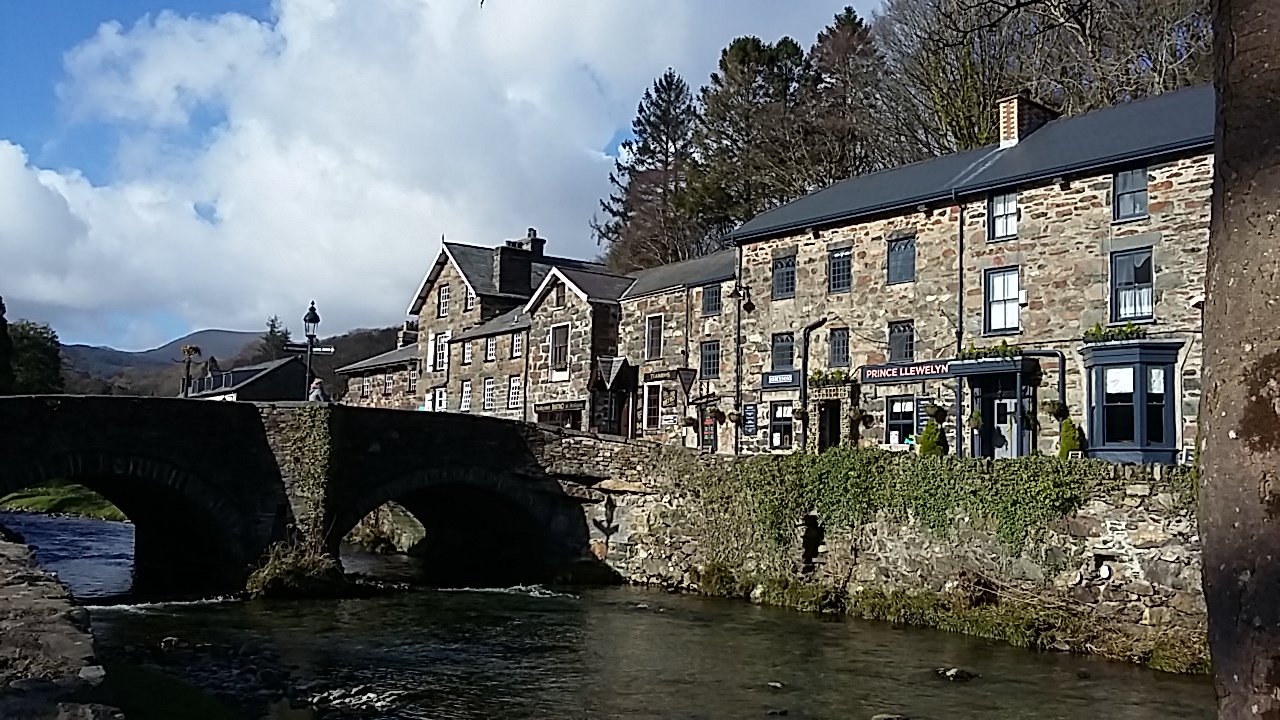
I had been staying with a cousin in North Wales with whom I had recently got back in touch after many years lack of correspondence between our branches of the family. We had spent several hours recounting family stories and leafing through old family photos and correspondence, and one afternoon we decided to take a drive through the mountains to visit the village of Beddgelert where our ancestor had once lived. That particular day we were blessed with beautiful weather and the mountains of Snowdonia looked both majestic and forbidding in the wonderous light and shadow of the afternoon sun. As we entered the village, we drove over a stone bridge crossing the river and parked on the side of the road a little way up from one of the village’s local pubs. The pub sign, hanging from the wall, depicted the legendary hound Gelert. As we walked back along the road and down the street towards the church, I had the strangest feeling of familiarity. I couldn’t recall ever visiting the place in person before, although we did visit North Wales when I was a child, and yet I was struck by the feeling of knowing the place in a way I couldn’t quite put my finger on. It was a feeling that I couldn’t shake off for the rest of the day.
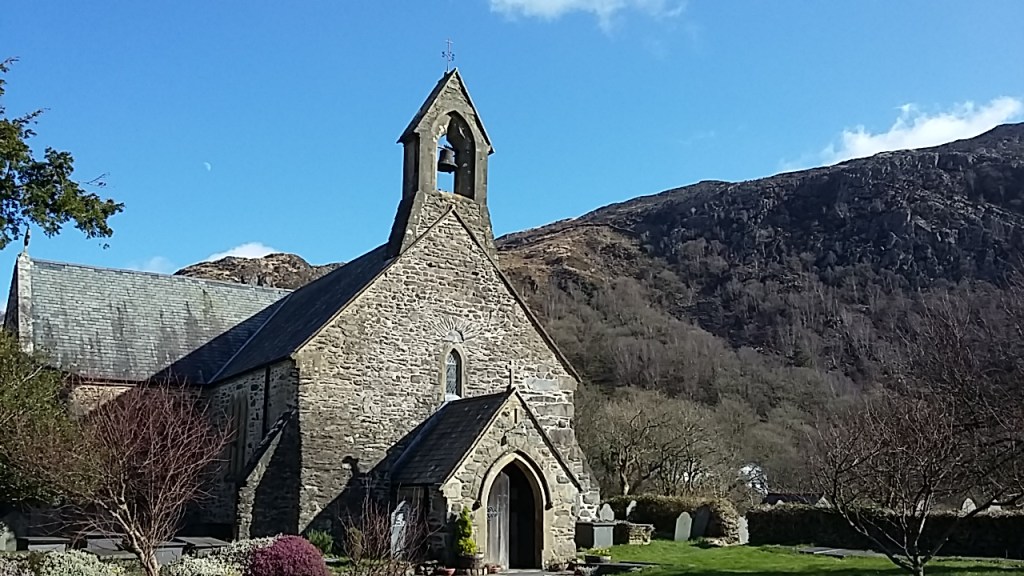
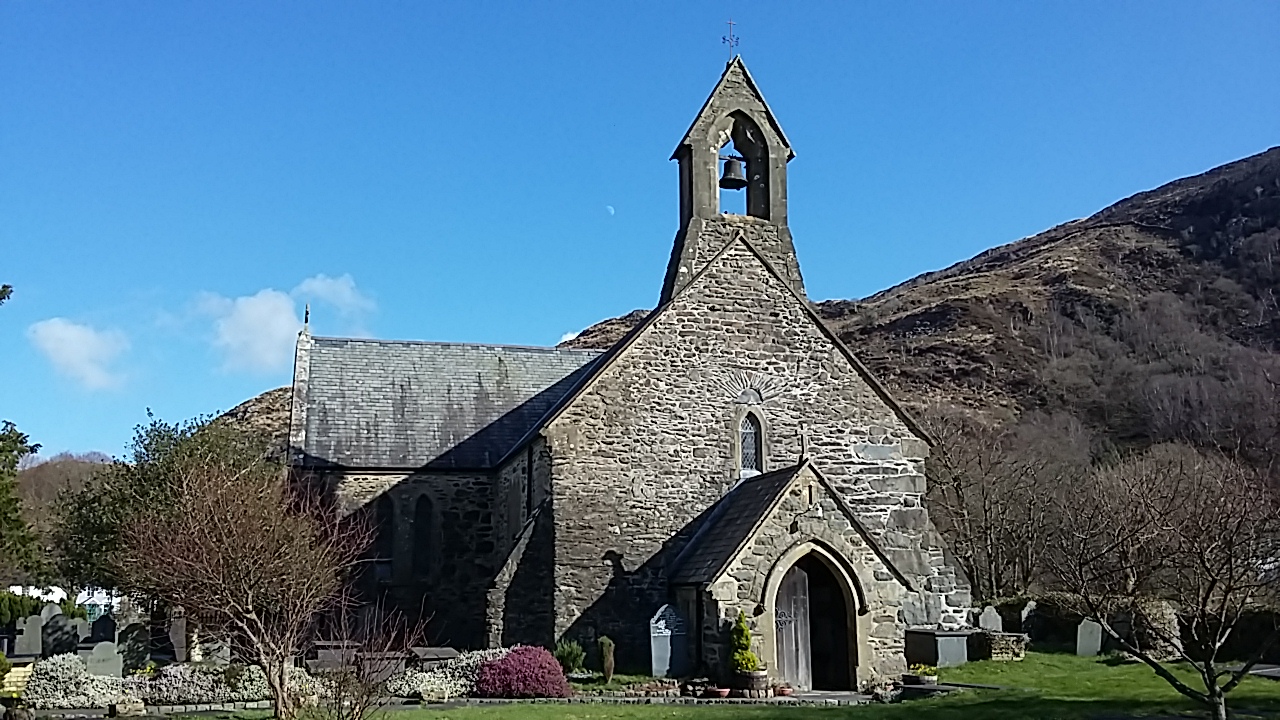
As we walked down the narrow, terraced street and entered the gate into the churchyard, I paused to take in the sight of the small, unobtrusive and yet somewhat beguiling church building that stood against the backdrop of the imposing Welsh mountains. We stepped along the curving pathway, lined with flattened grave stones, and crossed the threshold, entering the church building through the west porch.
Our ancestor, John Jones, was once the Perpetual Curate, or Priest in Charge, of the Church of St. Mary, which stands at the end of Stryd yr Eglwys (Church Street) in Beddgelert. The church building was originally part of an Augustinian Monastery but is all that remains since the rest of the monastery was burnt down during the war of conquest in the reign of Edward I. What is left is a small, unassuming chapel. It is a Grade II* listed building, parts of which date from the 12th century, and which is still in active use today. During the Victorian era the church and the parish were the property of a local landowning family and the Vicar and Patron was invariably absent from the village, meaning the church services were conducted by the Assistant Priest or Curate, who was specially licensed on a ‘perpetual’ basis – hence the term ‘Perpetual Curate’. The Reverend John Jones was the Perpetual Curate of St. Mary’s Church in Beddgelert from 1848 until 1855. During this time, he would have conducted services in the church every Sunday and would have been an important figure in the life of the village.
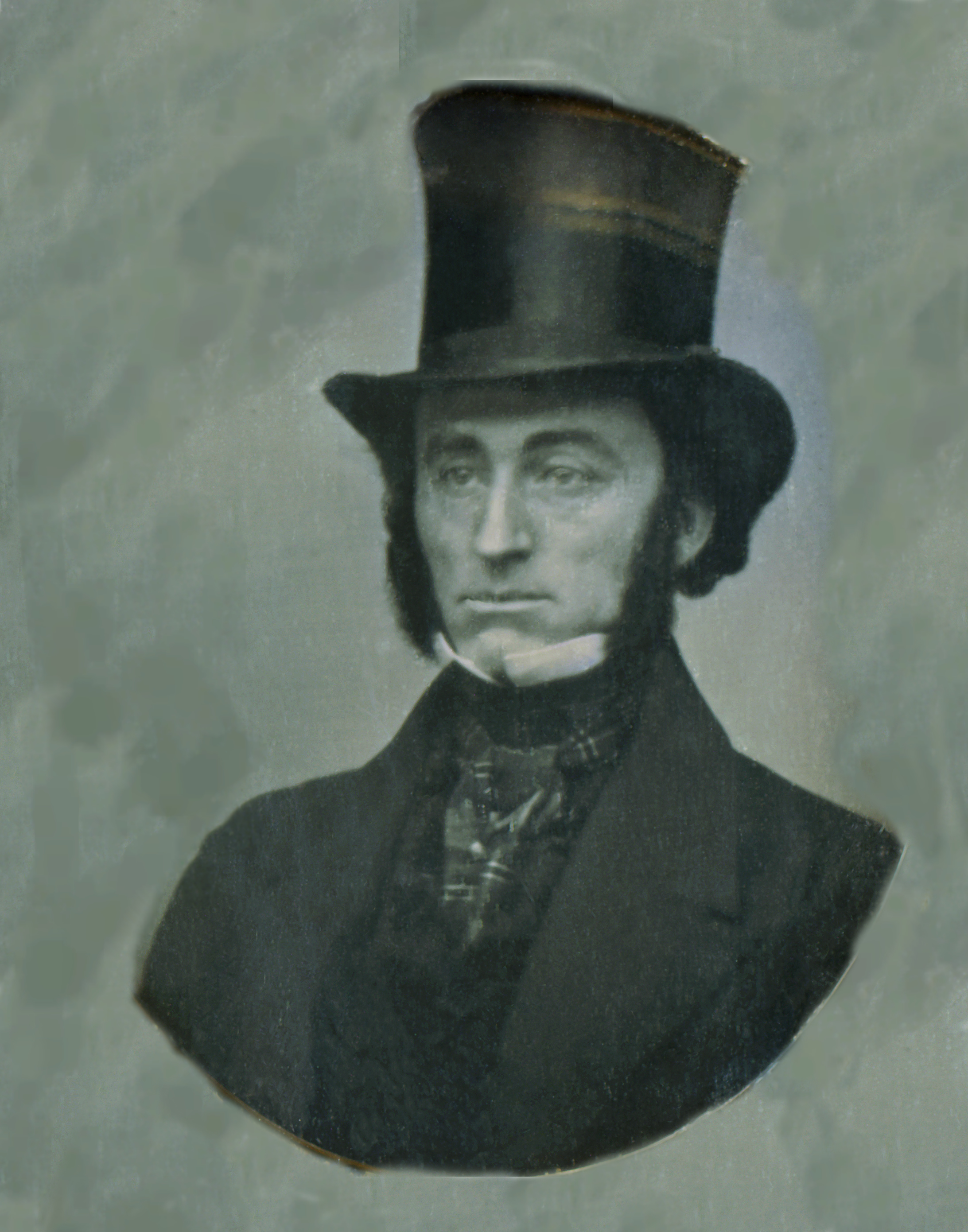
Yet, as with many priests and vicars across the country, he was just an ordinary man, living an ordinary life. As such he gains but one mention in the guidebook of St. Mary’s Church, written by Alan Bott and Margaret Dunn, and is largely forgotten in the mists of time. His most significant and lasting contribution to the church and life of the village appears to be the requisition of additional land for the burial of the dead.
According to Bott and Dunn, shortly upon arrival in Beddgelert the Rev’d John Jones realised the existing churchyard was quite small and more space was needed for burials. So, in 1848 he approached F. J. Walker-Jones, the owner of all the other land surrounding the church, including the field containing ‘Gelert’s Grave’, to ask if he would grant some land to the church in order to extend the churchyard. The land was granted and the churchyard extended by adjusting the perimeter wall. The extension was consecrated by the Bishop in 1849 although by 1884 more space was needed again and an additional burial ground was added to the south of the church. The 1848 extension was only minor by comparison and is only evidenced by adjustments to the existing perimeter wall which are not obvious, meaning the extension would probably not be remembered if it were not recorded in the guidebook.
Having read this for the first time myself, I take a moment to take in the inside of the church building. It is just the main central space, known as the nave, lined with pews where worshippers would sit, and a chancel and sanctuary at the east end where the altar is located. Behind the altar the rather charming east window is in three peaked arches, the central one depicting the crucifixion of Christ. The chancel and nave are separated by a dark wooden rood screen topped with golden statues of Christ and the angels of heaven. To the south side of the nave stands the pulpit and to the north there is a small side chapel and vestry. In the corner stands a ‘museum’ display of archaeological objects relating to the church’s history and on the south wall hangs a triptych of oil paintings depicting, in sombre detail, the crucifixion and Jesus’ descent from the cross. The west wall belies the green staining evidence of damp above the doorway as I exit the building to explore the churchyard. I cross to one corner and then walk the perimeter, observing the church and its surroundings from each perspective. I pause at the gate before leaving to consider how little evidence of John’s life remains here, and yet I am overcome with a presence that seems pervasive and known but is brief in its visitation. Perhaps he walks among the stones after all.
Before arriving in Beddgelert, John had previously graduated with a Bachelor of Arts degree in Theology from Trinity College, Dublin, in 1848 and in 1852 he was awarded a Master of Arts degree from the same college.
In 1855, at the age of 50, John moved his family to Reepham, Lincolnshire, where he became the Incumbent (Rector or Vicar) of the Church of St. Peter & St Paul. He stayed in Reepham where he later died and was buried in February 1873, at the age of 67 years.
As we leave the church in Beddgelert, and before leaving the village for the drive home, my cousin and I walk along the river to the site of Gelert’s Grave, where we pause to take in the view of the church and village surrounded by the awesome mountain scenery. As we walk, I explain that I have yet to unearth any diaries, letters or writings of John himself so that, unlike other members from the family’s past, we know very little about John’s character. We exchange what we each know about him, and the stories we have been told, and realise that the mystery surrounding him stems from his childhood.

John was born in 1805, son of Thomas Jones, in Llanilar, in mid-Wales. He was baptised in the same year and by the time of the first Census, recorded in 1841, he had moved to Wandsworth, near London, and was working as a School teacher at the age of 36. There, he met and married Ellen Watney, a daughter of the well-known brewing family, and together they had a total 14 children. Ellen was just 17 at the time of their marriage and John, who at the age of 38 was 21 years her senior, had to seek permission from her legal guardian, in this case her father, as Ellen was still under the legal age of consent. Her father gave permission and their marriage lasted until her tragic death in 1864. John never remarried.
John’s origins and childhood remain a mystery to this day. His baptism is recorded in a simple parish notebook and only lists the name of his father as Thomas Jones with no further information and no mention of the mother. As there were no census records until 1841, very little is known of the circumstances of John’s birth and childhood. It has also proved virtually impossible to trace his mother or any further information about his father, other than a reference to him in the Alumni Dublinensis, the Alumni book of Trinity College, as being ‘of noble birth’. It also notes that Thomas was ‘defunctus’ – Latin for defunct, meaning deceased – by the time John entered the college.
Several possible theories regarding John’s birth and childhood come to mind, though none can be verified. It is possible that he was raised in a minor noble family, or indeed that he may have been brought up by guardians if his parents had died when he was young. Given the lack of information regarding John’s mother, it may be that she died in childbirth and John may have been raised by guardians on behalf of his father. Whatever the circumstances, the subsequent trajectory of John’s life would appear to suggest a man in search of his place in society as he travelled to London to find a respectable profession and marry into a wealthy and respectable family, later to find his calling in the form of a second respectable profession often associated with lower sons of the nobility; namely becoming a member of the clergy.
Yet, much of this is simply conjecture and may not be the truth at all. Indeed, the suggestion that he did not know his mother sits a little at odds with the fact that our family has an oil painting which is said to be the portrait of John’s maternal uncle, which suggests that he maintained a connection with his mother’s family and they may indeed have had a little money and some standing in society. In truth, we know very little about John’s origins and with so little evidence it is likely that we will never know for sure the background from which he came or the nature of his childhood. Likewise, his character remains cloaked in shadows and myths. Stories about him have been passed down through the family but with no evidence or knowledge of his own thoughts, the ever-increasing distance of time makes it hard to know what to believe.
One such story that has persisted in family legend is that he was rather averse to fresh air and insisted that all the windows in the house remain closed, which can’t have been very pleasant for his wife and numerous children, some of whom became ill with Tuberculosis, which at the time was known as consumption due to its effect on the body which would appear to be ‘consumed’ by the disease. Although this story would seem to suggest something about John’s perhaps stern character, it is nonetheless just a story. Whether his family actually suffered any ill effects from limited fresh air, or indeed whether the story is true at all, is not known and without diaries or letters written by himself or members of his family it cannot be verified. Rather like the Prince and the hound, it is almost impossible to know the man himself or his true character when so much of our understanding of him is gathered from limited written documents and old family stories.
As I stand in the doorway of my grandfather’s study – having returned home from North Wales – admiring the oil painting depicting John’s likeness that hangs on the wall, I reflect upon how I feel I have come to know him and yet at the same time do not know him at all. Just as the legend of Gelert and the Prince of Gwynedd tells us something about the cultural identity of the village of Beddgelert, the stories told of John, and the little I have been able to uncover on written record, paint a picture of a man who will be ever present in our family and yet will forever remain mysterious and cloaked in myth and legend. The oil painting itself adds an even deeper, almost visceral, texture to his story. It is one of a pair, the other being of his wife Ellen, which were painted to celebrate their marriage and John’s graduation from Trinity College. The painting of Ellen has been parted from that of John for many years as it is in the possession of a distant relative with whom we have lost touch. The third, that of John’s maternal uncle, remains with my cousin in North Wales.
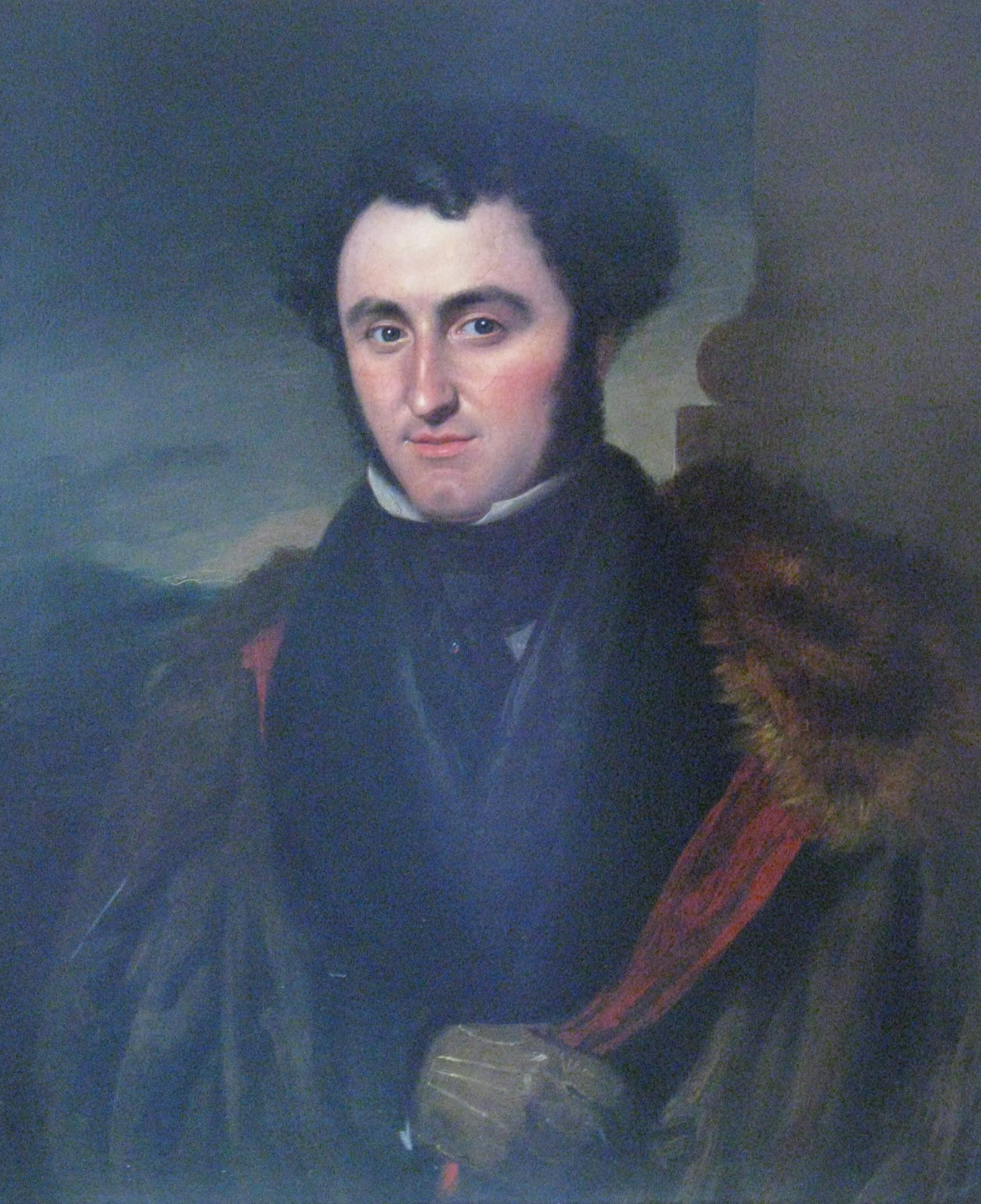
Thus, the painting of John is the only one now owned by my branch of the family and has come to take a dominant place in my life. It is a dark painted image of a dark-haired man in dark clothing and fur-collared Degree Hood, who stares out of the canvas with such a penetrating gaze that you feel he must be all-knowing and all-seeing. Rather like the God whom he served, the man in the painting peers deep into your soul. This stare and the dark nature of the painting made me feel uneasy as a child and I would often avoid entering my grandfather’s study, which was frustrating as it contained a large library of books that was very enticing to a young boy who loved to read. Yet, as I stare back at him, I realise as an adult I have come to love this painting, dark stare and all. It is a rather remarkable and tangible glimpse into a man with whom I now feel so familiar and yet will remain ever mysterious to me. Each time he stares at me I stare at him and increasingly feel as though I am glimpsing perhaps just a fraction of his soul, as he does with mine. As the evening sunlight catches the surface of the painting, illuminating it with a golden aura, I catch the faint hint of a wry, almost devilish smile on John’s lips. It is almost as if he knows my thoughts. Perhaps, just perhaps, it was his presence I felt at Beddgelert after all. Maybe, just maybe, it was his ghost I encountered, and not the mystical hound of Gwynedd, that day among the mountains.


 Stephen J. Dunning
Leave a comment