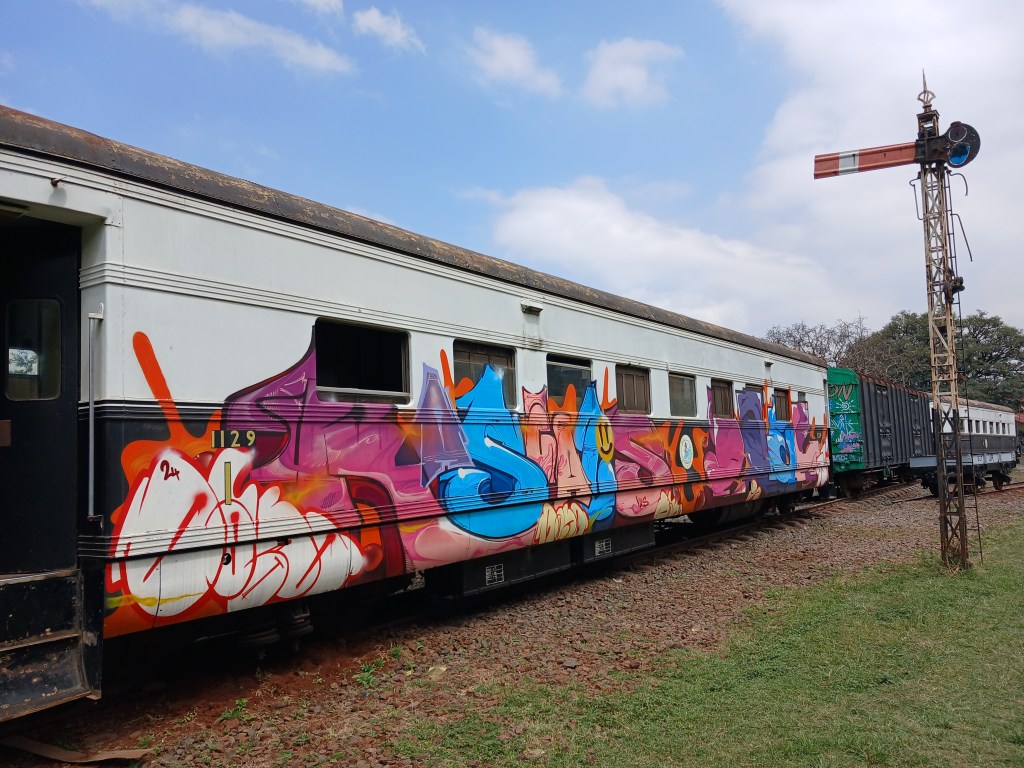
Post on the Royal Historical Society’s blog, Historical Transactions, published in August 2026. The post reflects on a three‑week archival research trip to Kenya and Uganda, supported by the Social History Society and the Royal Historical Society’s Martin Lynn Scholarship. It opens by tracing the author’s ancestral connection to East Africa through the 1896 journey of Richard and Arthur Church, who travelled to Mombasa to work on the construction of the Kenya-Uganda Railway. Their vivid journal descriptions of their arrival in the British East Africa Protectorate provide a historical frame for the author’s own arrival in Nairobi 130 years later.
The post outlines the research project’s aims: to investigate nineteenth‑century civil engineering technologies and their relationship to imperial and social ideologies, with the Kenya-Uganda Railway (1896-1901) as the central colonial case study. During the trip, the author consulted extensive Kenya Railways Corporation records at the Kenya National Archives, alongside collections at the National Museum of Kenya, the Nairobi Railway Museum, the University of Nairobi, and the British Institute in Eastern Africa. These materials show how railway construction, governance, and representation shaped colonial power and still influence public memory.
The post concludes by reflecting on the value of conducting archival research in East Africa itself. Engaging directly with local institutions, landscapes, and perspectives enriches understanding of the railway’s historical significance and its entanglement with broader imperial, social, and cultural histories. The title ‘Historia Nnalubaale’, combining Latin and Luganda, symbolises this meeting of European archival traditions with East African historical experience.


Leave a Reply